Street Photography Tips for Beginners and Pros in 2026 (Complete Guide)
 shotinspect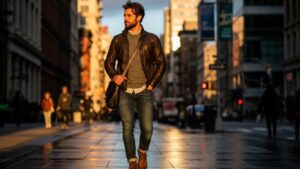
Introduction
Street photography is one of the most dynamic and unpredictable genres in photography. Unlike studio or landscape work, street photography focuses on capturing real-life moments as they unfold—raw, unposed, and authentic.
In 2026, with compact mirrorless cameras, fast autofocus systems, and lightweight lenses, street photography has become more accessible than ever before. Whether you're shooting in New York, San Francisco, or any city in the U.S., the goal remains the same: capture real human moments with emotion and storytelling.
This guide covers essential street photography tips, techniques, and gear choices for both beginners and professionals.
What Makes Street Photography Unique
Street photography is not about controlled environments. It is about:
- Spontaneous moments
- Real human behavior
- Natural lighting conditions
- Unplanned compositions
- Emotional storytelling
Unlike other genres, you cannot recreate a street moment. If you miss it, it’s gone forever.
Essential Mindset for Street Photography
1. Observe More Than You Shoot
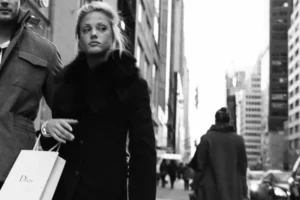
Great street photographers spend more time watching than clicking.
Look for:
- Body language
- Interesting interactions
- Light and shadow patterns
- Unusual compositions
2. Be Patient
Street photography often requires waiting for the right moment.
A perfect composition may take minutes or even hours to appear naturally.
3. Blend Into the Environment
The less attention you draw, the more natural your shots will be.
Tips:
- Dress simply
- Use small cameras
- Avoid intrusive movements
- Shoot casually, not aggressively
Best Camera Settings for Street Photography
Recommended Settings
- Shutter Speed: 1/250 or faster (freeze motion)
- Aperture: f/4 – f/8 (balance depth and sharpness)
- ISO: Auto ISO (adjust based on light)
- Focus Mode: Continuous AF or Zone Focus
Why It Works
These settings ensure you can react quickly while maintaining sharp, well-exposed images.
Best Lenses for Street Photography
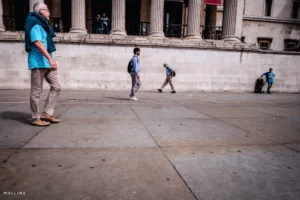
Lens choice is critical for mobility and discretion.
1. 35mm Lens (Most Popular Choice)
Best for:
- Environmental portraits
- City storytelling
- Balanced field of view
Examples:
- Sony FE 35mm f/1.8
- Canon RF 35mm f/1.8
2. 50mm Lens (Natural Perspective)
Best for:
- Candid portraits
- Isolated subjects
- Compression shots
3. Wide-Angle Lenses (24mm or 28mm)
Best for:
- Urban architecture
- Busy street scenes
- Immersive storytelling
You can explore more lens options in our Lens & Accessories section on ShotInspect.
Composition Techniques in Street Photography
1. Layering
Include foreground, subject, and background to create depth.
2. Framing
Use windows, doors, or reflections to frame your subject naturally.
3. Decisive Moment
Coined by Henri Cartier-Bresson, this refers to capturing the exact moment when composition and emotion align perfectly.
4. Leading Lines
Use roads, sidewalks, or building edges to guide viewer attention.
5. Contrast
Look for contrast between:
- Light and shadow
- Movement and stillness
- Color differences
- Old vs modern environments
Dealing With People in Street Photography
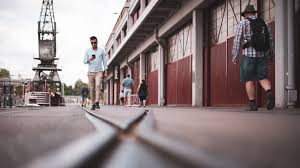
One of the biggest concerns for beginners is photographing strangers.
Tips:
- Be respectful and non-intrusive
- Avoid aggressive close-ups at first
- Shoot from a distance using longer focal lengths
- Smile or nod if eye contact happens
- Learn local photography laws
In most public spaces in the U.S., street photography is legal, but respect always matters more than the shot.
Gear for Street Photography
1. Compact Cameras
- Sony A7C II
- Fujifilm X100V / X100VI
- Canon EOS R8
2. Lightweight Lenses
- 35mm prime lenses
- 28mm compact primes
- Pancake lenses for discretion
3. Camera Bags
- Small sling bags (easy access)
- Minimalist backpacks (Peak Design style)
Editing Street Photography
Post-processing enhances mood and storytelling.
Adobe Lightroom
- Adjust exposure and contrast
- Enhance shadows/highlights
- Color grading for mood
Adobe Photoshop
- Remove distractions
- Fine-tune composition
- Advanced retouching
Street photography often benefits from subtle, not heavy editing.
Common Mistakes in Street Photography
1. Overthinking Settings
Moments happen fast—don’t spend too long adjusting camera settings.
2. Lack of Story
A random shot without context often feels weak.
3. Shooting Without Purpose
Always ask: What story am I trying to tell?
4. Ignoring Background
Background clutter can destroy an otherwise strong subject.
5. Fear of Shooting
Confidence improves with practice. The more you shoot, the more natural it becomes.
Final Thoughts
Street photography is about capturing real life as it happens—unfiltered, unpredictable, and emotional. In 2026, modern cameras and lenses make it easier technically, but the creative challenge remains the same: seeing moments before they disappear.
For photographers in the U.S., street photography is one of the best ways to improve composition skills, timing, and storytelling ability.
The best street photographers don’t just take pictures—they observe, anticipate, and understand human behavior.
SEO Keywords Used Naturally
street photography tips 2026, urban photography guide, candid photography techniques, best lens for street photography, photography composition street, beginner street photography USA, mirrorless street camera setup