How to Capture Motion and Action in Sports Photography in 2026 (Complete Guide)
 shotinspect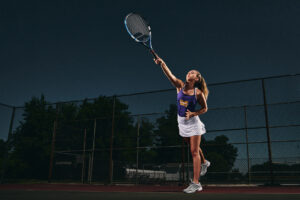
Introduction
Sports photography is one of the most challenging and exciting genres in photography. It requires precision timing, fast autofocus, and the ability to anticipate action before it happens.
In 2026, modern mirrorless cameras with advanced subject tracking and high-speed burst modes have made sports photography more accessible, but capturing truly impactful action shots still depends on skill, preparation, and the right equipment.
This guide will show you how to capture sharp, dynamic, and emotionally powerful sports images—whether you're shooting football, basketball, soccer, or extreme sports in the United States.
What Makes Sports Photography Different
Unlike other photography styles, sports photography is defined by:
- Fast and unpredictable movement
- Split-second timing
- High-pressure environments
- Constant subject tracking
- No chance for retakes
You are not just taking photos—you are predicting action.
Essential Equipment for Sports Photography
1. Camera Body (Speed Matters Most)
A sports photography camera must handle:
- Fast continuous shooting (10–30+ fps)
- Advanced autofocus tracking
- Low-light performance
Recommended Cameras:
- Canon EOS R6 Mark II
- Sony A9 III
- Nikon Z8
These cameras are designed to lock onto moving subjects with extreme precision.
2. Telephoto Lenses (Most Important Gear)
Sports photography heavily relies on long focal lengths.
Best Options:
- 70–200mm f/2.8 (most versatile)
- 100–400mm (wildlife + field sports)
- 400mm+ primes (professional stadium use)
Why It Matters
Telephoto lenses allow you to:
- Isolate athletes from background clutter
- Capture close-up action from a distance
- Compress perspective for dramatic impact
You can explore detailed lens breakdowns in the Lens & Accessories section on ShotInspect.
3. Fast Memory Cards
High-speed burst shooting generates massive data.
You need:
- UHS-II SD cards or CFexpress cards
- High write speed for continuous shooting
- Reliable performance under pressure
4. Monopod (Optional but Useful)
For heavy telephoto lenses, a monopod provides stability without limiting mobility.
Camera Settings for Sports Photography
Recommended Settings
- Shutter Speed: 1/1000 or faster
- Aperture: f/2.8 – f/5.6
- ISO: Auto (adjust for lighting conditions)
- Focus Mode: Continuous AF (AI tracking enabled)
- Drive Mode: High-speed burst
Why These Settings Work
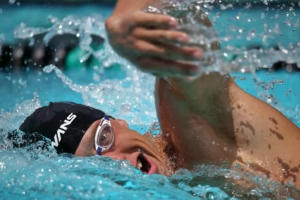
Fast shutter speed freezes motion, while continuous autofocus ensures moving subjects remain sharp.
Mastering Timing and Anticipation
1. Learn the Sport
Understanding the rules helps predict action.
For example:
- Basketball → anticipate jumps and shots
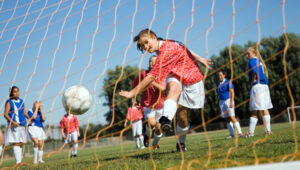
- Soccer → track ball movement and passing direction
- Football → watch quarterback positioning
2. Pre-Focus Strategy
Pre-focus on areas where action is likely to happen, such as:
- Goal zones
- Finish lines
- Key player positions
3. Shoot Before the Peak Moment
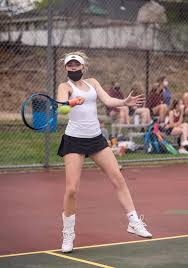
The best sports photos often happen slightly before or after the peak action.
Composition in Sports Photography
1. Show Emotion
Focus on:
- Facial expressions
- Body tension
- Reactions (win/lose moments)
2. Include Environment
Don’t isolate everything—include:
- Stadium crowd
- Arena lighting
- Field context
3. Use Motion Blur Creatively
Panning technique:
- Follow moving subject
- Use slower shutter speed (1/125–1/250)
- Create background motion blur while keeping subject sharp
Lighting Challenges in Sports Photography
Sports environments are often unpredictable.
Indoor Sports
- Basketball arenas
- Gym lighting
- Mixed artificial light
Solution: high ISO + fast lenses
Outdoor Sports
- Changing sunlight
- Shadows on field
- Weather conditions
Solution: adjust exposure constantly and shoot in RAW
Best Sports Photography Lenses
70–200mm f/2.8 Lens
Best for:
- Indoor sports
- Medium-distance action
- Versatile field coverage
100–400mm Lens
Best for:
- Outdoor sports
- Wildlife-style sports shots
- Long-distance coverage
Prime Telephoto Lenses (300mm / 400mm+)
Best for:
- Stadium sports
- Professional sideline photography
- Maximum image quality
Editing Sports Photography
Post-processing is essential for clarity and impact.
Adobe Lightroom
- Adjust exposure and contrast
- Enhance color balance
- Sharpen action shots
Adobe Photoshop
- Remove distractions
- Crop for composition
- Enhance focus on subject
Common Mistakes in Sports Photography
1. Wrong Shutter Speed
Too slow = motion blur
Too fast = loss of emotion
2. Poor Anticipation
Reacting instead of predicting leads to missed shots.
3. Ignoring Background
Cluttered stadium backgrounds reduce image quality.
4. Underusing Burst Mode
Sports photography requires continuous shooting.
Final Thoughts
Sports photography in 2026 combines advanced technology with human timing and intuition. While modern cameras make it easier to track fast-moving subjects, capturing truly powerful images still depends on anticipation, composition, and understanding the sport itself.
For photographers in the U.S., sports photography offers one of the most exciting opportunities to build a portfolio, especially for events, school sports, and professional leagues.
The best sports photographers are not just observers—they are predictors of action.