Fujifilm X-T5 Review: The Best APS-C Mirrorless Camera for 2026?
 shotinspect
Introduction
Fujifilm has long been celebrated for its dedication to image quality, color science, and classic design. The Fujifilm X-T5, released in 2026, continues this tradition with an APS-C sensor, improved autofocus, and advanced video capabilities. Ideal for enthusiasts and semi-professional photographers, the X-T5 offers a compact yet powerful alternative to full-frame systems. This review will explore its features, real-world performance, and suitability for photographers, particularly in the U.S. market.
Design and Build Quality
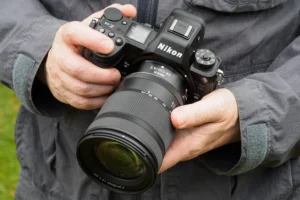
The X-T5 maintains Fujifilm’s signature retro design with a sturdy magnesium alloy body. It weighs approximately 607 grams with battery and card, making it lightweight and portable. The camera is fully weather-sealed, capable of handling rain, dust, and moderate snow—perfect for outdoor photographers and travel enthusiasts.
The manual dials for shutter speed, ISO, and exposure compensation are tactile and precise, appealing to photographers who appreciate hands-on control. The tilting LCD screen supports touch input for quick focus selection and menu navigation, while the electronic viewfinder (EVF) provides a 3.69 million-dot resolution with minimal lag.
Sensor and Image Quality
The heart of the X-T5 is a 40-megapixel APS-C X-Trans CMOS 5 HR sensor paired with the X-Processor 5. This sensor delivers exceptional detail, dynamic range, and color accuracy. Fujifilm’s renowned film simulation modes provide unique creative options, making it easy to achieve professional-looking images straight out of the camera.
Low-light performance is impressive for an APS-C sensor. The ISO range is 160–12800, expandable to 80–51200, with minimal noise at higher settings. Portraits, street photography, and landscapes all benefit from the sensor’s excellent tonal reproduction and sharpness.
Autofocus Performance
The X-T5 features a 425-point phase-detection autofocus system, covering most of the frame. Eye and face detection are fast and reliable, making it a strong contender for portrait photographers. Continuous autofocus in tracking mode performs well for action shots, although it is slightly less aggressive than full-frame systems like the Canon R6 Mark II or Sony A7 IV.
Continuous Shooting and Speed
The camera supports up to 15 frames per second (fps) using the mechanical shutter and 20 fps with the electronic shutter. This high-speed performance is suitable for street photography, wildlife, and sports shooting. Buffer depth has been improved, allowing longer bursts without slowdown, which is essential for capturing decisive moments.
Video Capabilities
The X-T5 is a capable hybrid camera, offering 4K DCI recording at 60fps with 10-bit 4:2:0 internally and 10-bit 4:2:2 externally via HDMI. Full HD recording supports up to 240fps for slow-motion effects. The camera includes F-Log recording for maximum post-production flexibility, making it appealing to content creators and videographers.
In-body image stabilization (IBIS) provides up to 7 stops of correction when paired with OIS lenses, ensuring steady handheld footage and sharp images in low-light conditions.
Connectivity and Workflow
Wi-Fi and Bluetooth connectivity allow for seamless transfer to smartphones, tablets, and computers. Fujifilm’s Camera Remote app supports remote shooting, which is convenient for studio, macro, and wildlife photography. Dual SD card slots (UHS-II compatible) provide redundancy and faster write speeds for high-resolution images and video files.
Pros
- Exceptional image quality with 40MP APS-C sensor
- Classic Fujifilm design with manual dials
- Reliable autofocus for portraits and street photography
- Advanced video capabilities with F-Log and 10-bit recording
- IBIS for sharp handheld images
Cons
- APS-C sensor may be less desirable for full-frame enthusiasts
- Continuous autofocus slightly slower than top-tier full-frame cameras
- Smaller native lens selection compared to Canon and Sony
Comparison with Competitors
Compared to the Canon EOS R6 Mark II and Sony A7 IV, the X-T5 is smaller and lighter but delivers comparable image quality for most photography scenarios. While full-frame cameras provide slightly better low-light performance, the X-T5’s APS-C sensor, coupled with Fujifilm’s color science, produces vibrant and pleasing results suitable for professional work.
Conclusion
The Fujifilm X-T5 is a versatile and compact APS-C mirrorless camera ideal for enthusiasts, hybrid shooters, and content creators. Its combination of high-resolution images, classic design, and robust video features makes it a strong competitor in 2026.
For photographers in the United States seeking a lightweight, reliable, and aesthetically pleasing camera, the X-T5 offers a compelling balance of portability, performance, and creative flexibility. It’s perfect for street, portrait, travel, and hybrid photography without the bulk of a full-frame system.
SEO Keywords Naturally Included: Fujifilm X-T5, APS-C mirrorless camera, 2026 camera review, best mirrorless camera for enthusiasts, hybrid camera review, photography gear USA, 4K video camera, Fujifilm camera review