Night Photography Case Study: How to Capture City Lights Like a Pro
 shotinspect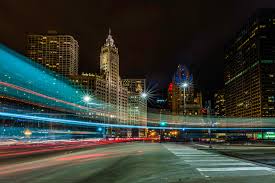
Introduction
Night photography is one of the most visually striking genres in modern photography. From glowing city skylines to long-exposure light trails, night scenes allow photographers to transform ordinary urban environments into cinematic visuals.
However, shooting at night is also technically challenging due to low light conditions, motion blur, and exposure control issues.
In this case study, we break down how professional photographers capture stunning city night photography in real-world conditions across urban environments in the United States.
The Core Idea Behind Night Photography
Night photography is not just about darkness—it is about controlling artificial light sources and long exposure effects.
Strong night images usually focus on:
- Light trails from vehicles
- City skyline illumination
- Reflections on water or glass
- Contrast between shadows and neon lights
- Motion combined with stillness
The goal is to create a cinematic interpretation of urban life after dark.
Choosing the Right Location
Location plays a major role in night photography success.
Ideal environments include:
- City downtown skylines
- Bridges with traffic flow
- Waterfront reflections
- Rooftop viewpoints
- Busy intersections
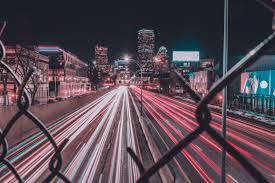
In cities like San Francisco, photographers often capture iconic night scenes featuring bridges, skyscrapers, and ocean reflections.
Timing for Night Photography
Night photography is typically divided into two key time windows:
1. Blue Hour (Best Starting Point)
- Occurs just after sunset
- Sky retains deep blue tones
- City lights begin to turn on
- Ideal balance between natural and artificial light
2. Full Night (Dark Environment)
- Strong artificial lighting dominates
- Best for long exposure effects
- Requires more precise camera settings
Camera Settings for Night Photography
Night photography requires careful exposure control.
Recommended settings:
- Aperture: f/8 – f/16 (for sharp cityscapes) or f/1.8–f/4 (low-light handheld shots)
- Shutter Speed: 5–30 seconds (for long exposure)
- ISO: 100–800 (to reduce noise)
- Focus: manual focus for precision
👉 A tripod is essential for most night photography setups.
Lens Choice for Night Photography
Common professional choices:
- Wide-angle lenses (16–35mm) for cityscapes
- Standard primes (35mm, 50mm) for street night shots
- Telephoto lenses for compressed skyline perspectives
Wide lenses are most commonly used for capturing full city scenes.
Long Exposure Techniques
Long exposure is the foundation of night photography.
What it creates:
- Smooth light trails from cars
- Motion blur in water or clouds
- Enhanced light movement effects
Key requirement:
A stable tripod and remote shutter release or timer mode.
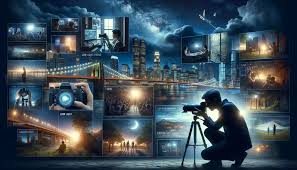
Composition Techniques for Night Scenes
1. Leading Light Trails
Use traffic lines to guide viewer attention.
2. Reflections
Wet streets or water surfaces double the visual impact.
3. Framing City Skylines
Use bridges, buildings, or windows to frame scenes.
4. Contrast of Light and Dark
Strong contrast creates cinematic depth.
Post-Processing Night Photography
Editing plays a crucial role in night photography.
Common adjustments:
- Noise reduction
- Exposure balancing
- Highlight recovery
- Color grading (cool blue or warm neon tones)
- Clarity and dehaze adjustments
The goal is to enhance mood without over-processing the image.
Common Mistakes in Night Photography
1. High ISO Overuse
Leads to excessive noise in images.
2. Camera Shake
Even small movement ruins long exposures.
3. Overexposed Highlights
City lights can easily blow out if not controlled.
4. Poor Timing
Shooting too early or too late reduces lighting balance.
Creative Styles in Night Photography
1. Cinematic Cityscapes
Emphasizing storytelling and atmosphere.
2. Light Trail Photography
Capturing movement of vehicles and traffic flow.
3. Neon Street Photography
Focusing on colorful urban lighting.
4. Minimal Night Scenes
Simple compositions with strong negative space.
Final Thoughts
Night photography transforms ordinary cities into visually dramatic environments full of light, motion, and atmosphere. While it requires technical precision, the creative possibilities are almost unlimited.
In 2026, photographers in the United States continue to use night photography as a way to build cinematic portfolios, especially in major urban centers.
Ultimately, great night photography is about more than exposure—it is about learning how to see light in the dark.
SEO Keywords
night photography case study 2026, city light photography tips, long exposure photography guide, how to shoot night cityscapes, San Francisco night photography, cinematic night photography, urban light trail photography