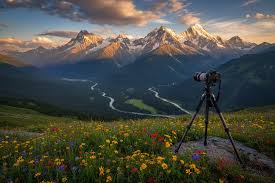
How This Award-Winning Portrait Was Shot (Lighting & Camera Settings Breakdown)
 shotinspect
Introduction
Award-winning portrait photography often looks effortless—but behind every powerful image is a carefully planned combination of lighting, composition, camera settings, and post-processing techniques.
In this case study, we break down how a professional-level portrait is created, analyzing the key decisions that turn a simple photo into an award-winning image.
This type of breakdown is commonly searched by photographers in the United States who want to understand how professional portraits are actually created in real-world conditions.
The Concept Behind the Portrait
Great portraits always start with a concept.
In most award-winning portrait work, the goal is to capture one or more of the following:
- Emotion
- Character depth
- Mood storytelling
- Visual simplicity
- Strong subject separation
The photographer’s intention is more important than the equipment used.
Lighting Setup Breakdown
Lighting is the most important factor in portrait photography.
Common professional lighting setups:
1. Soft Natural Window Light
- Used for emotional, natural portraits
- Creates soft shadows and skin tones
- Common in editorial photography
2. Studio Softbox Lighting
- Controlled environment
- Balanced highlights and shadows
- Ideal for commercial portraits
3. Rim Light + Key Light Combination
- Adds depth and separation
- Creates cinematic look
- Often used in award-winning portraits
Camera Settings Used in Professional Portraits
Typical settings for high-end portrait photography:
- Aperture: f/1.4 – f/2.8 (subject isolation)
- ISO: 100–800 (low noise control)
- Shutter Speed: 1/125 – 1/250
- White Balance: adjusted based on lighting setup
👉 The goal is always sharp subject + controlled background blur
Lens Choice Matters
Most professional portraits use prime lenses for maximum sharpness and bokeh.
Common choices:
- 85mm f/1.4 (most popular portrait lens)
- 50mm f/1.2 or f/1.4
- 135mm f/1.8
好的,我们继续把 Inspiration & Case Studies 分类做完整闭环(第2篇)。
Street Photography Case Study: Capturing Emotion in Urban Environments
Introduction
Street photography is one of the most powerful forms of visual storytelling. Unlike controlled studio environments, street photography relies on spontaneity, timing, and the ability to observe real human moments in unpredictable urban settings.
In this case study, we break down how professional street photographers capture emotional, story-driven images in cities like New York, San Francisco, and Chicago—common inspiration hubs for photographers in the United States.
The Core Idea Behind Street Photography
At its core, street photography is not about buildings or locations—it is about human behavior in public spaces.
Strong street photographs usually focus on:
- Emotion in candid moments
- Human interaction
- Isolation in crowds
- Urban contrast (light vs shadow)
- Unexpected visual storytelling
The goal is to capture real life without staging it.
Choosing the Right Location
Location plays a major role in street photography success.
High-activity environments include:
- Busy city intersections
- Subway stations
- Markets and street vendors
- Tourist areas
- Public transport hubs
In cities like New York City, photographers often find endless opportunities due to constant movement and diversity.
Timing and Light Conditions
Lighting defines the mood of street photography.
Best times to shoot:
1. Golden Hour
- Soft directional light
- Long shadows
- Warm tones
2. Blue Hour
- Cinematic urban atmosphere
- Artificial city lights begin to dominate
3. Overcast Days
- Soft diffused lighting
- Ideal for emotional storytelling
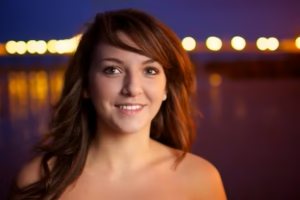
Camera Settings for Street Photography
Street photography requires flexibility and speed.
Recommended settings:
- Aperture: f/5.6 – f/8 (zone focusing flexibility)
- Shutter Speed: 1/250 or faster
- ISO: Auto or 400–1600 depending on light
- Focus Mode: Continuous or manual zone focus
Lens Choice for Street Photography
Most professionals prefer compact and discreet lenses.
Common options:
- 35mm prime lens (most versatile)
- 50mm lens (natural perspective)
- 28mm lens (wide environmental storytelling)
Smaller lenses help photographers stay unnoticed and capture more natural moments.
Composition Techniques Used by Professionals
1. Layering
Foreground, subject, and background elements create depth.
2. Framing
Using doors, windows, or structures to frame subjects naturally.
3. Contrast of Emotion
Happy subject vs chaotic environment creates strong storytelling.
4. Leading Lines
Guiding viewer attention toward the subject.
Capturing Emotion in Real Time
The hardest part of street photography is timing.
Professionals rely on:
- Anticipation of movement
- Observing patterns in human behavior
- Pre-focusing techniques
- Quick reaction shooting
The best images often happen in less than one second.
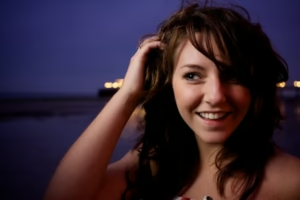
Post-Processing Street Photography
Editing is used to enhance mood, not change reality.
Common adjustments:
- Contrast enhancement
- Black and white conversion
- Selective color grading
- Cropping for composition refinement
Many street photographers prefer a gritty or documentary style edit.
Ethical Considerations
Street photography must respect public boundaries.
Key principles include:
- Avoid invasive behavior
- Respect privacy when required
- Focus on storytelling, not exploitation
- Be aware of local photography laws
Final Thoughts
Street photography is one of the purest forms of visual storytelling because it captures life as it naturally unfolds.
In 2026, even with advanced camera technology, the most important tools remain the same:
👉 Observation, timing, and creativity.
For photographers in the United States, street photography offers endless opportunities to practice composition, emotion capture, and real-world storytelling skills.
Every city becomes a living studio—if you know how to see it.
SEO Keywords
street photography case study 2026, how to shoot street photography, urban photography tips, candid photography techniques, New York street photography guide, documentary photography style, emotional street photography examples
- Categories
- Inspiration & Case Studies