Best Telephoto Lenses for Wildlife Photography in 2026 (Ultimate Guide)
 shotinspect
Introduction
Wildlife photography is one of the most demanding genres in photography. Capturing fast-moving animals in unpredictable environments requires not only skill—but also the right telephoto lens.
In 2026, telephoto lens technology has significantly improved, with faster autofocus, better image stabilization, and lighter optical designs. Whether you are photographing birds in flight, safari wildlife, or sports events, a high-quality telephoto lens is essential.
This guide covers the best telephoto lenses for wildlife photography in 2026, focusing on performance, reach, autofocus speed, and real-world usability for photographers in the United States.
Why Telephoto Lenses Are Essential for Wildlife Photography
Wildlife photography requires distance. Getting physically close to animals is often impossible or unsafe, which is why telephoto lenses are critical.
Typical wildlife focal lengths include:
- 70–200mm → general wildlife, portraits, close-range animals
- 100–400mm → versatile wildlife + travel
- 150–600mm+ → birds, safaris, distant subjects
Key advantages:
- Allows safe shooting distance
- Strong subject isolation (background blur)
- Compression effect for dramatic images
- Ability to capture behavior without disturbing wildlife
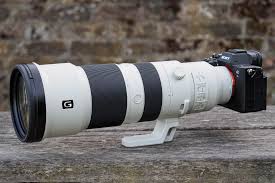
1. Sony FE 100-400mm f/4.5–5.6 GM OSS (Best Overall Telephoto Lens)
Sony’s 100-400mm GM lens is one of the most balanced wildlife lenses in 2026.
Key Features
- 100–400mm versatile zoom range
- Optical SteadyShot stabilization (OSS)
- Fast XD linear autofocus motors
- G Master optical quality
Performance
This lens delivers outstanding sharpness across most of the zoom range. Autofocus is extremely fast and accurate, especially when paired with Sony’s A1 or A7R series bodies.
It performs exceptionally well for birds, safari wildlife, and even sports photography. The stabilization system allows handheld shooting at longer focal lengths, which is a major advantage in the field.
Pros
- Excellent sharpness
- Fast autofocus tracking
- Lightweight for its range
Cons
- Expensive
- Not as long as 600mm options
2. Canon RF 100-500mm f/4.5–7.1L IS USM (Best Canon Wildlife Lens)
Canon’s RF 100-500mm is one of the most popular wildlife lenses among professionals.
Key Features
- 100–500mm extended reach
- Dual Nano USM autofocus
- 5-stop image stabilization
- Weather-sealed L-series build
Performance
This lens provides exceptional reach for distant wildlife, making it ideal for bird photography and safari environments.
Sharpness remains impressive even at 500mm, and autofocus tracking is highly reliable when paired with Canon’s EOS R series cameras.
The lens is slightly slower in aperture, but compensates with strong stabilization and optical quality.
Pros
- Excellent reach (up to 500mm)
- Very sharp optics
- Reliable stabilization
Cons
- Variable aperture (f/7.1 at 500mm)
- Expensive
3. Nikon Z 180-600mm f/5.6–6.3 VR (Best Reach for Wildlife Photography)
Nikon’s 180-600mm lens is a game-changer for wildlife photographers who need extreme reach without super-telephoto prime lenses.
Key Features
- Massive 180–600mm zoom range
- Built-in VR stabilization
- Internal zoom design
- Excellent sharpness for long-range shots
Performance
This lens is ideal for bird photography and distant wildlife where reach matters more than aperture speed.
Autofocus is fast and accurate, and image stabilization helps maintain sharpness at extreme focal lengths.
Despite its size, it remains relatively balanced when mounted on Nikon Z bodies.
Pros
- Extremely long reach
- Excellent sharpness
- Strong stabilization
Cons
- Large and heavy
- Not ideal for handheld travel use
4. Sigma 150-600mm f/5-6.3 DG DN OS Sports (Best Budget Telephoto Option)
Sigma offers one of the most affordable high-performance wildlife lenses.
Key Features
- 150–600mm zoom range
- Optical stabilization system
- Weather-sealed Sports line build
- Compatible with Sony and L-mount
Performance
This lens delivers excellent value for money. While not as sharp as premium G Master or Canon L lenses, it performs very well for beginners and intermediate wildlife photographers.
It is especially popular among photographers who want extreme reach without spending flagship-level prices.
Pros
- Affordable compared to competitors
- Huge zoom range
- Good stabilization
Cons
- Heavier than Sony/Canon equivalents
- Autofocus slightly slower
Buying Guide: Which Telephoto Lens Should You Choose?
Choose Sony 100-400 GM if:
- You want balance of weight and performance
- You shoot fast wildlife or sports
- You need reliable autofocus
Choose Canon 100-500mm if:
- You need maximum reach
- You shoot birds or safari photography
- You use Canon RF system
Choose Nikon 180-600mm if:
- You prioritize extreme reach
- You shoot distant wildlife
Choose Sigma 150-600mm if:
- You are on a budget
- You want long focal range at lower cost
Wildlife Photography in Real-World Conditions
In real field conditions, wildlife photography demands more than just reach:
- Fast autofocus tracking is critical for birds in flight
- Image stabilization reduces blur at long focal lengths
- Weather sealing is essential for outdoor environments
- Burst shooting helps capture fast movement
Modern telephoto lenses in 2026 are significantly more capable than older generations, making wildlife photography more accessible than ever before.
Final Thoughts
Telephoto lenses are one of the most important investments for serious wildlife photographers. In 2026, manufacturers have successfully combined reach, sharpness, and stabilization into more usable and versatile designs.
For most photographers in the U.S., the Sony 100-400 GM and Canon 100-500L represent the best balance of performance and usability, while Nikon dominates in extreme reach.
If your goal is to capture wildlife, birds, or sports at a professional level, a high-quality telephoto lens is absolutely essential.